
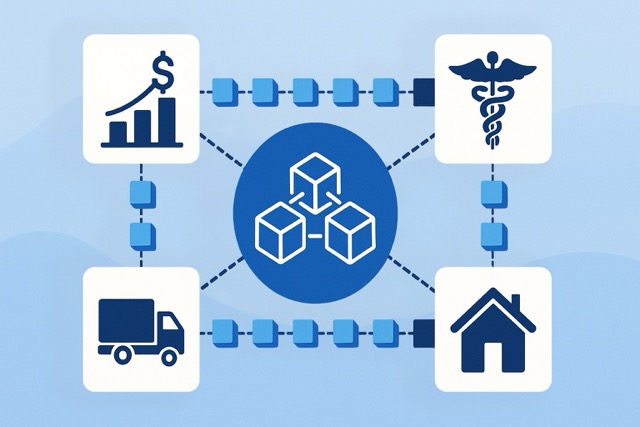
Blockchain isn’t just a buzzword anymore—it’s actively reshaping how businesses manage data, interact with partners, and build trust with customers. As a decision-maker, you’re likely hearing about blockchain in more meetings, pitch decks, and product roadmaps. But if you strip away the hype, blockchain is simply a secure, decentralized digital ledger. What makes it powerful is how it solves practical problems around transparency, speed, and verification in business operations. In this article, you’ll learn how companies in logistics, finance, healthcare, and other sectors are applying blockchain to solve real challenges—along with what you should know before adopting it yourself.
Supply Chain Transparency Gets a Boost
If you’re in supply chain or logistics, you know how easy it is for products to disappear in transit—or for tracking data to be unreliable. Blockchain fixes that by creating a permanent, timestamped record for every step in the supply chain. With distributed ledgers, each party—from manufacturer to distributor to retailer—gets access to the same verified data.
Walmart’s partnership with IBM’s Food Trust blockchain is one of the most well-known examples. They’ve used it to track leafy greens from farm to shelf, cutting the time it takes to trace a product from seven days to under three seconds. That kind of traceability isn’t just a food safety win; it also helps reduce losses, improve inventory management, and boost customer confidence.
You don’t need to be a corporate giant to benefit. Smaller companies are using blockchain to monitor shipments, verify ethical sourcing, and even automate customs paperwork through smart contracts. The days of endless spreadsheets and error-prone handoffs are being replaced with verified, shared records.
Real-Time Cross-Border Payments
In finance, blockchain is solving long-standing issues with cross-border payments. Traditional systems can take days and involve multiple intermediaries, each charging fees and introducing delays. Blockchain clears and settles transactions in near real time with lower costs and better security.
Ripple is a standout in this area. Banks and fintech firms use its blockchain network to send money globally with instant settlement. This cuts out middlemen like SWIFT, reduces fees, and brings more predictability to international payments.
If you’re handling international transactions for your business, whether it’s vendor payments or customer refunds, blockchain-powered solutions give you speed and accountability. You can confirm transactions immediately and reduce your reliance on third parties. This isn’t just faster—it’s also cheaper and more secure.
Securing Healthcare Records
In healthcare, data privacy and integrity are non-negotiable. Blockchain gives you a way to store patient records in a secure, tamper-proof system that allows only authorized access. It helps eliminate duplicate records, ensure compliance, and create a single source of truth for patient history.
Hospitals and research institutions are using blockchain to store and share medical data without compromising privacy. With encrypted digital identities and access keys, patients can control who sees their data and for how long. You no longer need to worry about someone altering records or unauthorized access because every change is logged and time-stamped.
For providers, this can reduce errors and administrative overhead. For patients, it brings more control and transparency. And for regulators, blockchain supports compliance with privacy laws like HIPAA by creating verifiable audit trails.
Simplifying Real Estate Transactions
In real estate, paperwork and fraud are frequent headaches. Blockchain can streamline the process by creating a single, verified digital record for each property. That includes title history, zoning data, mortgage details, and ownership transfers.
Smart contracts automate steps like escrow, payment transfers, and even rent collection. Once conditions are met, the transaction executes automatically. This cuts down on closing times and removes the need for multiple intermediaries—saving time and reducing costs.
Sweden’s land registry authority has already tested a blockchain-based system for property transfers, and pilot programs are underway in the U.S. and UAE. For buyers and sellers alike, this technology offers faster, more transparent deals with fewer chances for dispute.
Smart Contracts Are Automating Agreements
You’ve probably heard the term “smart contract” tossed around. These are self-executing pieces of code stored on a blockchain that trigger actions when preset conditions are met. No middlemen. No delays. Just automation.
Let’s say you’re hiring a freelancer. You can set up a smart contract that releases payment once the work is submitted and approved. Or maybe you’re leasing equipment—the contract can automatically pause access if payment isn’t received by a certain date.
Businesses are using smart contracts for vendor agreements, insurance claims, licensing deals, and more. They reduce human error, enforce compliance, and save time you’d otherwise spend chasing signatures or managing disputes. If your operations rely on repetitive or rule-based agreements, smart contracts can be a game changer.
Transparent and Tamper-Proof Voting
Voting systems are vulnerable to manipulation, whether in company governance, local elections, or shareholder decisions. Blockchain provides a tamper-proof ledger where each vote is recorded permanently and can’t be changed.
Several startups are building secure, blockchain-based voting platforms that verify voter identity, track participation, and deliver real-time results—all while maintaining anonymity. In business settings, this means cleaner, faster shareholder meetings, board elections, and policy votes.
If you’ve ever questioned the integrity of a vote—internal or public—blockchain gives you a way to rebuild trust and reduce the risk of fraud. It’s not just for governments; it’s being used in DAOs (Decentralized Autonomous Organizations) and even corporate governance.
Challenges You Need to Consider
Despite its advantages, blockchain isn’t a plug-and-play solution. You need to plan carefully before integrating it into your systems. Scalability remains a challenge, especially with public blockchains that handle thousands of transactions per second. There’s also a learning curve. Developers need specialized skills, and you may need to overhaul existing workflows.
Regulatory clarity is another issue. Many jurisdictions are still figuring out how to treat blockchain-based records, smart contracts, and tokenized assets. Until the legal structure is more defined, you’ll need to work closely with legal counsel before launching any blockchain features publicly.
And let’s not forget cost. While blockchain can reduce operational inefficiencies, initial implementation can be expensive. You’ll need infrastructure, integrations, security audits, and staff training. But for the right use case, those upfront investments can pay off.
How is blockchain used in business operations?
- Tracks goods in real time
- Enables instant global payments
- Secures healthcare records
- Automates contracts
- Prevents voting fraud
- Speeds up property deals
- Reduces intermediaries and errors
In Conclusion
Blockchain is no longer just for crypto enthusiasts—it’s changing how you handle contracts, payments, records, and collaboration in real-world business. From securing patient data to streamlining global transactions, this technology gives you more control and less friction in critical workflows. While adoption comes with challenges, the benefits of better transparency, automation, and trust can far outweigh the costs. Whether you’re in logistics, finance, healthcare, or real estate, now’s the time to explore how blockchain can optimize your business.
Eager for more insights and discussions on business, technology, and innovation, perhaps in an audio format? You can find additional content, including talks and interviews, on my SoundCloud profile.

Yitz Stern is a New York–based entrepreneur and business consultant with 20+ years of experience in alternative funding and real estate. A former CEO of Fundry and managing director at Tiger Financial Technologies, he now advises mid- to large, non-public companies on capital strategy and scalable growth while investing in multifamily real estate