
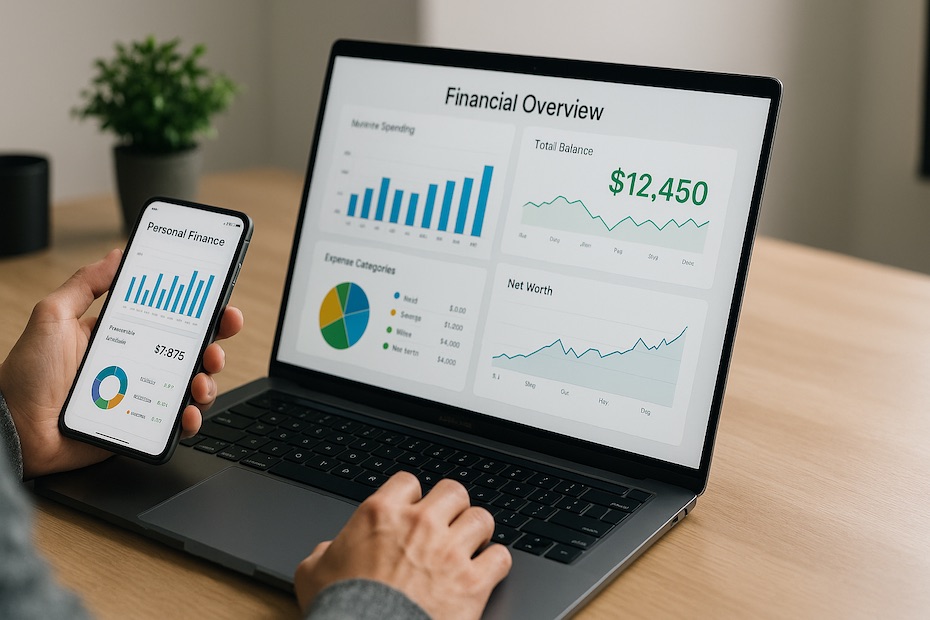
You move closer to financial freedom when you use technology to measure your progress, automate your decisions, and strengthen your financial routines. Tech gives you a clear path to build wealth with structure instead of relying on willpower.
This guide shows you how to integrate digital tools into your financial workflow so you track spending precisely, automate saving and investing, manage debt with control, and treat your finances with the same discipline you bring to professional performance.
What is tech-enabled financial freedom?
Tech-enabled financial freedom means you build a money system powered by digital tools that track, automate, and analyse your financial decisions. You connect your accounts, monitor your numbers in real time, and follow data-backed habits instead of emotional reactions. This structure gives you a stable foundation for long-term financial strength.
You experience more control because you can view everything in one place—expenses, investments, savings, and liabilities. When your financial picture stops living in scattered spreadsheets or memory, your decision-making grows sharper. You can adjust quickly, forecast accurately, and protect your progress from unnecessary drift.
Technology also helps you shift from reactive management to strategic planning. You replace guesswork with dashboards, reports, and automated rules that move money toward your goals without requiring constant attention. The more you rely on systems, the more your financial life becomes predictable and aligned with your long-term vision.
Which budgeting apps help you gain control of your spending?
Budgeting apps help you track your spending precisely and reveal where your money actually goes. When you connect your accounts, the system categorises transactions automatically and shows patterns you might otherwise overlook. That visibility helps you redirect funds toward savings or investments with far more confidence.
You benefit from apps that support real-time alerts, automatic categorisation, and monthly reports. These features keep you accountable and help you respond early when spending drifts away from your targets. When your app notifies you about approaching limits, you adjust quickly instead of facing surprises later.
The real value comes from consistency. When you use your budgeting app as part of a weekly or monthly review habit, you build a routine that stabilises your financial behaviour. You gain clarity on your priorities and eliminate hidden waste. Over time, this discipline becomes a core driver of your financial growth.
How can you automate savings and accelerate your progress?
Automation helps you save consistently, even when motivation slips. You can set rules that move money to savings or investment accounts right after payday, ensuring you always pay yourself first. These rules eliminate manual effort and strengthen your long-term strategy by removing decision fatigue.
You can also use round-up features, scheduled transfers, or goal-based triggers to increase your savings. These tools transform small daily actions into long-term gains. You no longer depend on reminders or good intentions; the system handles everything with accuracy and speed. When your money moves itself, discipline becomes effortless.
Over time, automated systems generate momentum. Your savings grow consistently, your investment contributions stay on track, and your emergency fund strengthens. When you build a predictable flow toward your goals, every month moves you closer to financial freedom without extra effort on your part.
What technologies support smarter investing?
Investment dashboards help you view your portfolio clearly, track performance, and evaluate whether your allocation matches your risk level. You can see trends, review returns, and compare your strategy against your long-term goals. This clarity helps you make confident adjustments and avoid emotional choices.
You also gain value from platforms that automate contributions and rebalance your portfolio. When investing becomes a regular process rather than a reactive task, you reduce timing mistakes and maintain steady exposure to growth opportunities. This stability improves your long-term returns and keeps your strategy aligned with your financial plan.
Modern investing tools also give you access to projections, fee breakdowns, and performance summaries. You can measure progress effectively and adjust your contributions or strategy with precision. When you use these tools regularly, your investments become part of a structured routine that supports lasting financial growth.
How should you monitor debt and credit using digital tools?
Debt-tracking tools help you keep your liabilities under control. They show balances, interest rates, payoff timelines, and total monthly obligations. When you see the full picture, you can choose the most efficient repayment method and stay consistent without losing track of deadlines.
Credit-monitoring tools give you alerts for score changes, utilisation levels, and new account activity. These notifications help you protect your credit health and respond quickly to potential issues. When you understand your credit behaviours, you maintain access to better rates and stronger financial leverage.
Using these tools together provides a complete view of how your liabilities affect your financial trajectory. You can adjust payments, plan future borrowing more effectively, and maintain a clean credit profile. This structure ensures your debt strategy supports your long-term goals instead of slowing your progress.
What metrics help you evaluate whether your tech-driven system is working?
Metrics give you a scorecard for your financial habits. You track your monthly savings rate, your investment contribution frequency, and your net-worth growth over time. When you measure these indicators, you gain early warnings if your progress stalls and early confirmation when your strategy takes hold.
You also pay attention to metrics like your debt-to-income ratio, emergency-fund balance, and spending accuracy. These numbers show whether your day-to-day behaviour supports your long-term goals. When you review them regularly, you refine your plan with the same discipline you apply in professional settings.
Over time, these metrics reveal trends that shape your strategy. You can identify which automations work, which spending habits need correction, and which investment decisions strengthen your future. This continuous feedback loop becomes one of your strongest tools for building long-term financial stability.
How can you create a tech-driven money routine that lasts?
A sustainable money routine begins with structure. You set weekly check-ins to review expenses, monthly meetings to evaluate savings and debt, and quarterly sessions to adjust your investment strategy. These moments keep your financial plan active and prevent drift over time.
You use your tools as anchors for these routines. Your budgeting app becomes your weekly snapshot, your savings automation becomes your monthly engine, and your investment dashboard becomes your quarterly review. Each tool supports a different layer of your financial system, but together they form a cohesive workflow.
When you treat your financial routine like a training program, consistency becomes manageable. You reinforce habits until they become second nature. This structure helps you stay aligned with your goals and ensures your technology delivers real results rather than becoming unused noise in your life.
How Can Tech Help You Achieve Financial Freedom?
- Track spending with connected apps
- Automate savings and investments
- Monitor credit and debt in real time
- Review progress using clear financial metrics
Build Your Financial Freedom System
You now have a clear path for using technology to strengthen your financial life. When you rely on automation, dashboards, and consistent review rhythms, you transform your finances from reactive decisions to controlled systems. You develop habits that protect your savings, strengthen your investments, and accelerate your long-term progress.

Yitz Stern is a New York–based entrepreneur and business consultant with 20+ years of experience in alternative funding and real estate. A former CEO of Fundry and managing director at Tiger Financial Technologies, he now advises mid- to large, non-public companies on capital strategy and scalable growth while investing in multifamily real estate